
Most parents meet the Pokémon Trading Card Game through a shoebox of cards and a child who suddenly speaks a language you do not. Decks, Prizes, abilities, ex, Mega, the meta. It can sound like a lot.
It is simpler than it looks once you have the spine of it. This guide explains how a game is actually won, why a deck is more than a stack of strong cards, and what is really going on when your child asks for one specific card by name. None of it requires you to play. It just helps you understand what they are doing and spend sensibly when you do buy.
A game is a race to six Prize cards
At the start of a game each player sets aside six cards face down. These are the Prize cards. Every time you knock out one of your opponent's Pokémon, you take one of your Prizes. The first player to take all six wins.
This one rule explains almost everything else. The whole game is a race to six, and every card a deck includes is there to help win that race faster or slow the opponent down.
Why some Pokémon are worth more than one Prize
Here is the part that surprises most parents. Not every knockout is worth the same. Ordinary Pokémon are worth one Prize card. But the powerful cards marked ex are worth two, and the brand new Mega Evolution cards are worth three.
That is the trade-off built into the game. The strongest cards hit hardest, but losing one hands the opponent a big chunk of the race. A clever deck is not simply the deck with the biggest attackers. Sometimes a cheaper single-Prize deck wins precisely because it never gives much away.
This is why a budget deck can beat an expensive one, which is worth knowing before you are talked into the priciest cards in the shop.
Basic, Stage 1, Stage 2: Pokémon grow up
Pokémon evolve in the card game just as they do in the video games. A Basic Pokémon can be played straight onto the table. A Stage 1 is placed on top of its Basic, and a Stage 2 on top of the Stage 1.
This matters for time. A Stage 2 attacker like Charizard ex needs three cards and a couple of turns to get going, so the deck has to survive while it sets up. A Basic attacker can come down and fight almost immediately. Speed versus power is one of the main choices a deck makes.
Energy: the fuel for every attack
Pokémon cannot attack without Energy attached to them. You normally get to attach one Energy per turn, which sounds slow, and it is. Much of the skill in the game is about getting Energy onto your attackers faster than the rules would normally allow.
When your child gets excited about a card that attaches extra Energy, this is why. Cards that break the one-per-turn limit are some of the most valuable in any deck.
Abilities versus attacks: the quiet half of the game
Every Pokémon card can attack. The better ones also have an Ability, printed in a coloured bar, which is a free effect you can use without attacking. Abilities are the quiet half of the game and often the half that decides it.
A good example is Pidgeot ex. It rarely attacks at all. Its Ability simply lets you find any one card in your deck each turn, which removes almost all of a deck's bad luck. Whole decks are built around one Ability like that. When you understand the Ability, you understand the deck.
So what is a deck, really?
A deck is exactly 60 cards, and a good one is not a collection of favourites. It is a small machine with a single plan. A few attackers to take Prizes, a few support Pokémon with helpful Abilities, cards to find and draw what you need, and the Energy to power it all. Every card earns its place.
This is the gap between a child's binder and a tournament deck. The binder is the best cards. The deck is the right cards, working together. Helping your child see that difference is one of the most useful things you can do, and it happens to be a genuinely good lesson about systems and trade-offs.
The meta, and why it keeps changing
You will hear the word meta. It just means the decks that are winning most often right now. As of the middle of 2026, one deck towers over the format: Dragapult ex makes up close to half of all competitive decks. The rest of the field is largely a question of how to beat it, with decks like Hydrapple ex built specifically to out-last it.
The meta shifts for two reasons. New sets add new cards, and twice or so a year the game rotates, retiring older sets from tournament play. The 2026 rotation was a big one. Long-standing staples that nearly every deck relied on, including the draw card Professor's Research and the disruption card Iono, left the format, forcing decks to rebuild.
The practical takeaway for a parent: cards do not stay tournament-legal forever. Before investing heavily in a competitive deck, it is worth checking that its key cards are in the current Standard format. Cards your child plays casually at home never expire, but the tournament list does change.
Where to go from here
You do not need to memorise any of this. The spine is enough: it is a race to six Prizes, stronger cards give more away when they fall, and a deck is a plan rather than a pile.
If you want to see how the pieces fit, our card pages explain what each popular card does and which deck it belongs to, and the deck pages walk through how each one tries to win. Follow a card into its deck and the whole thing starts to make sense.
Cards mentioned
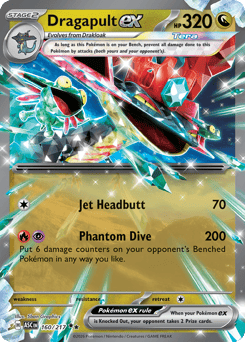 Dragapult ex
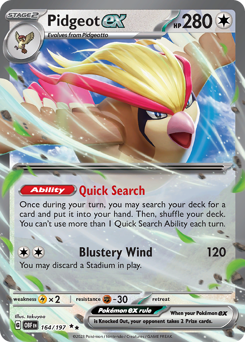 Pidgeot ex
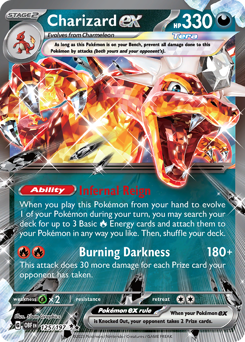 Charizard ex
Decks mentioned